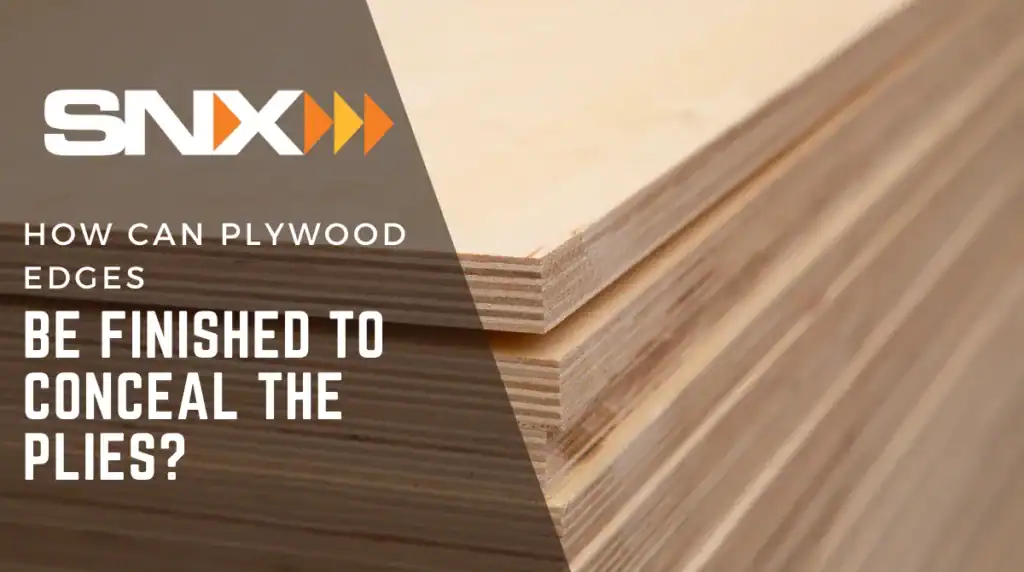
In modern panel processing, plywood edges are more than a cosmetic concern, they’re a quality marker. Whether you’re producing cabinetry, architectural panels, or commercial millwork, exposed plies can undermine an otherwise precision-built product. The right edge-finishing approach turns raw panels into refined, production-ready components, exactly where engineered automation makes the biggest difference. Looking to standardize edge quality at scale? Talk with SNX Technologies about automated finishing solutions built for production environments.
Key Takeaways
- You can cover up the layered look of plywood edges using solid wood or veneer edge banding. This is a pretty standard way to make them look more finished.
- For a cleaner look, you can shape and smooth the edges. Tools like a block plane and sanders help here, and sometimes even a li’l pucker handheld scraper can be useful for those final touches.
- Wood filler is a good option if you want a smooth, solid edge that you can then paint or stain. It’s great for hiding those plies completely.
- Adding decorative molding or trim to the edges can give your project a more upscale appearance and hide the plywood layers.
- No matter how you finish them, protecting the edges with a good coating and keeping them dry will help them last longer and look good.
Preparing Plywood Edges for a Seamless Finish
Consistent edge preparation is the foundation of repeatable results. In high-throughput shops, uneven cuts or poorly prepped edges don’t just affect appearance, they slow workflows and introduce rework. Precision cutting, calibrated tooling, and controlled material handling ensure every panel enters the finishing stage ready for uniform results. SNX Technologies helps manufacturers eliminate variability before finishing even begins, ask about precision edge prep and processing systems.
Understanding Plywood Edge Characteristics
Plywood edges are basically a stack of thin wood layers, called veneers, glued together. Each layer runs in a different direction, which is what makes plywood strong. But when you look at the edge, you see all those lines. Sometimes, depending on the type of plywood, the edges can be a bit rough or even have voids where the glue didn’t quite fill everything. Knowing what you’re working with is the first step to hiding those plies. Some plywoods, like birch or maple, have finer grain and might be easier to get a smooth finish on. Others, like construction-grade stuff, might have more noticeable voids or coarser layers.
Selecting the Appropriate Plywood Type
Not all plywood is created equal when it comes to finishing edges. If you’re aiming for a really clean, smooth look, you’ll want to pick a higher-grade plywood. Cabinet-grade plywood, for instance, usually has smoother, more uniform plies and fewer imperfections on the edges. If you’re using something like utility-grade plywood, you might have to do a lot more work to get those edges looking decent. Sometimes, it’s just not worth the effort, and you might be better off covering the edges entirely with solid wood or a thicker veneer.
The Importance of Accurate Cuts and Measurements
This part is super important, and honestly, I’ve messed this up before. If your cuts aren’t straight and square, you’re going to have a bad time later. When you try to attach edge banding or trim, gaps will show up, and it’ll look sloppy. Precise cuts mean your edge treatments will fit snugly, making the whole thing look like one solid piece. It’s not just about looks, either. A good, tight fit helps protect the edge from damage and moisture. So, take your time with the saw and the tape measure. It really does make a difference down the line.
Making accurate cuts isn’t just about aesthetics; it’s about creating a stable foundation for your edge treatment. A well-cut edge will accept glue or adhesive more evenly, leading to a stronger bond and a more durable finish. Don’t rush this step – it pays off.
Here’s a quick rundown of why accuracy matters:
- Clean Joints: Straight cuts ensure edge banding or trim sits flush without gaps.
- Better Adhesion: Even surfaces allow glues and adhesives to bond properly.
- Professional Appearance: A tight fit makes the edge look like part of the original material, not an afterthought.
- Durability: Properly fitted edges are less likely to chip or peel over time.
Applying Solid Wood or Veneer Edge Banding
So, you’ve got this plywood project, and those layered edges are just staring at you, right? Well, one of the most common ways to make them disappear is by adding some edge banding. You’ve got two main choices here: solid wood or veneer.
Using Hardwood Edging for Strength and Longevity
If you’re building something that’s going to get a lot of use, like a workbench or a kitchen island, solid hardwood edging is the way to go. It’s tough, it holds up well, and it looks pretty darn good. You can even pick a wood that matches your project for a really cohesive look. When you’re attaching it, you’ll want to make sure it’s glued on nice and tight. Some folks use clamps, others might use brad nails, but the goal is a solid bond. After the glue dries, you’ll sand it all flush so it looks like one continuous piece. It’s a bit more work, but the durability is totally worth it.
Applying Pre-Glued Veneer Edge Banding with Heat
In production settings, edge banding must balance speed, adhesion strength, and finish quality. Automated edge-banding systems apply consistent pressure, heat, and feed rates, delivering clean bonds and uniform results panel after panel. This level of control is essential for manufacturers producing at volume without compromising finish integrity. Explore SNX Technologies’ edge-banding and panel-processing solutions designed for accuracy, uptime, and scalability.
Trimming and Smoothing Applied Edge Banding
Once your edge banding is on, whether it’s hardwood or veneer, you’ve got to clean up the edges. This is where a sharp utility knife comes in handy. You want to carefully trim off any overhang, making small, slicing cuts rather than trying to hack it all off at once. Take your time here; it makes a big difference in the final appearance. After trimming, you’ll use sandpaper, starting with a coarser grit and moving to finer ones, to smooth everything down. You’re aiming for an edge that’s perfectly flush with the plywood surface and feels smooth to the touch. It’s all about those little details that make a project look professionally done.
Shaping and Smoothing Plywood Edges
So, you’ve got your plywood cut, and now you’re staring at those layered edges. They’re not exactly pretty, right? This is where we get down to making them look less like, well, plywood. It’s all about refining those edges so they don’t scream ‘DIY project’ in the worst way.
Utilizing a Block Plane for Bulk Material Removal
Manual shaping has its place, but in commercial environments, automated edge profiling ensures speed without sacrificing consistency. CNC-guided shaping and sanding systems maintain uniform profiles across large production runs, reducing operator fatigue while improving finish accuracy. Don’t just hack at it. Hold the plane at a bit of an angle – think of it like a gentle slicing motion. This helps prevent tear-out, which is when little bits of the wood splinter off. It’s a much cleaner way to take off the excess material before you get to the finer stuff. You’re basically shaving off the high spots here. See how SNX Technologies integrates automated shaping and sanding into streamlined panel workflows.
Flushing Edges with a Palm Sander
After the block plane has done its main job, or if you’re just dealing with minor imperfections, a palm sander comes in handy. This is where you really bring the edge flush with the face of the plywood. The goal is to make it look like one continuous surface. You want to be careful here, though. Go too hard, and you might sand through the face veneer, which is a whole other problem. A good rule of thumb is to keep sanding until the sander starts to touch the painter’s tape you might have put down earlier. That’s usually a sign you’re getting pretty close to being perfectly flush.
Protecting Surfaces with Painter’s Tape
This might seem like a small thing, but using painter’s tape is a game-changer. Before you start planing or sanding, run a strip of tape along the face of the plywood, right up to the edge. This does a couple of things. First, it protects the main surface from accidental scratches or gouges from your tools. Second, it gives you a visual cue when you’re sanding.
Once your sander starts eating into the tape, you know you’re getting close to being perfectly flush with the edge. It’s a simple step that saves a lot of headaches and potential mistakes. It’s especially helpful when you’re trying to get a really clean line where the edge banding meets the main panel. You can find good quality painter’s tape at most hardware stores, and it’s a small investment for a much cleaner finish on your plywood project.
Here’s a quick rundown of what to aim for:
- Block Plane: Use at an angle for a slicing cut to remove bulk material and reduce tear-out.
- Palm Sander: Work gradually to bring the edge flush with the plywood face.
- Painter’s Tape: Apply to protect surfaces and act as a guide for flush sanding.
When you’re shaping and smoothing, patience is key. It’s better to take off a little material at a time and check your progress than to rush and accidentally remove too much. The aim is a smooth, consistent transition from the edge to the face of the plywood.
Advanced Edge Finishing Techniques
Sometimes, just sanding and filling isn’t quite enough to get that really professional look on your plywood edges. That’s where a few more involved methods come into play. These techniques take a bit more practice, but they can really make your project pop.
Routing Edges with a Round-Over Bit
Using a router with a round-over bit is a fantastic way to soften sharp plywood edges. It not only looks good, giving a nice, smooth curve, but it also makes the edge more comfortable to touch and less prone to chipping. You’ll want to pick a bit size that fits the look you’re going for. Start by securing your plywood well – you don’t want it moving around while the router is on. Then, make a few practice passes on some scrap wood first. It takes a steady hand to get a consistent curve all the way around.
- Safety First: Always wear eye protection and hearing protection when routing. Make sure the router is unplugged when you change bits.
- Technique: Guide the router smoothly along the edge, letting the bit do the work. Don’t force it.
- Cleanup: After routing, a light sanding with fine-grit sandpaper will knock down any fuzzies and make the edge super smooth.
Creating a Spline and Groove for Alignment
This is a bit more advanced, but it’s great for joining two pieces of plywood or for adding a decorative element. You’ll need a router with a straight bit and a dado blade set, or a table saw with a dado blade. You cut a groove in the edge of one piece and a corresponding groove in the edge of the other. Then, you cut a thin strip of wood, called a spline, that fits snugly into both grooves. This not only aligns the pieces perfectly but also adds a hidden strength and a nice visual detail if the spline material is different from the plywood.
This method is particularly useful when you want to ensure that the faces of two plywood pieces meet up perfectly flush, especially if you’re working with thicker material or need a really strong joint. It takes precision, but the results are worth the effort.
Employing Biscuit Joints for Face Alignment
Biscuits are small, football-shaped pieces of compressed wood that are inserted into slots cut into the edges of two pieces of wood. You use a special tool called a biscuit joiner to cut these slots. Once the glue is applied and the pieces are brought together, the biscuits swell slightly, creating a strong, self-aligning joint. This is a really good way to keep the faces of your plywood edges perfectly aligned while the glue dries, preventing any unwanted steps or gaps. It’s quicker than some other alignment methods and provides decent strength for many applications.
- Slot Cutting: Use the biscuit joiner to cut slots in both edges that will be joined. Make sure the slots are positioned to line up perfectly.
- Glue Application: Apply wood glue to the edges and into the slots.
- Assembly: Insert the biscuits into one set of slots, then bring the two pieces together. Clamp firmly until the glue cures.
Filling and Concealing Plywood Plies
Sometimes, even with the best edge banding or careful shaping, those plywood plies can still peek through, especially on edges that get a lot of handling. That’s where wood filler comes in handy. It’s like a little bit of magic for making those layered edges disappear.
Using Wood Filler for Seamless Edges
In high-output environments, filler application must be fast, uniform, and compatible with downstream finishing. Automated or semi-automated filling processes help eliminate visual defects while keeping panels moving through production without bottlenecks, especially critical for paint-grade components. SNX Technologies supports finishing workflows that reduce manual touchpoints and improve surface consistency.
The Role of a Putty Knife in Filler Application
Your putty knife is your best friend when applying wood filler. It’s not just for scooping the stuff out of the can. You use it to really push the filler into those little spaces between the plies. Think of it like spackling a wall – you want to fill the void and then smooth it off. A flexible putty knife is usually best for this, as it can bend a bit to get into those tight spots. You’ll want to hold it at an angle to really press the filler in and then scrape away the excess.
Using a putty knife effectively means not just spreading the filler, but really working it into the porous edge of the plywood. This ensures a strong bond and a surface that’s ready for sanding without leaving air pockets.
When Wood Filler is the Ideal Solution
Wood filler is fantastic when you’re aiming for a painted finish or if the edges won’t be seen up close. It’s also great for filling small gaps or imperfections that might show up after you’ve applied edge banding. If you’re going for a natural wood look, you’ll want to be extra careful with your filler choice and application, as some fillers don’t take stain quite the same way as the plywood itself.
For projects where the edge is a major visual element and you want a perfect wood grain match, you might lean more towards solid wood edge banding or carefully selected veneer. But for most situations where you just want a clean, smooth edge that’s ready for finishing, wood filler is a solid choice.
Customizing Plywood Edges with Color and Texture

So, you’ve got your plywood edges looking pretty decent, maybe you’ve even hidden those plies. Now what? Well, you can totally change how they look with some color and texture. It’s a neat way to make your project stand out, or just blend in better with the room.
Staining Plywood Edges for a Natural Look
From stain to paint to high-performance coatings, edge finishes must be applied with precision to maintain color consistency across batches. Automated finishing systems help manufacturers achieve repeatable results while reducing overspray, waste, and rework, key advantages in competitive production environments. Ask SNX Technologies how automated finishing systems improve consistency while reducing material waste.
Painting Plywood Edges for Customization
Painted edges are awesome because you can do literally anything. Want bright red edges on a bookshelf? Go for it. Need to match a specific wall color? No problem. The key here is a good primer. It helps the paint stick and gives you a more even finish. After the primer dries, you can brush or spray on your chosen color. Multiple thin coats are usually better than one thick one. It’s a simple way to add a pop of personality to your work.
Using Contrasting Edge Banding for Visual Appeal
This is where you can get a bit creative. Instead of trying to match the plywood, you pick an edge banding that’s totally different. Think dark wood banding on light plywood, or even a bright color. It creates a really sharp visual line. You’ll want to make sure the banding is applied well, so it looks like it belongs there. After it’s on and trimmed, it gives the edge a whole new character. It’s a bit like adding a frame to a picture, really drawing attention to the edge.
Here’s a quick rundown of what to consider:
- Color Match: Decide if you want the edge to blend in or stand out.
- Texture: Stains highlight wood grain, while paint offers a smooth, uniform surface.
- Application Method: Staining and painting are straightforward. Edge banding requires careful application for a clean look.
When you’re customizing edges, remember that the goal is to make the piece look intentional. Whether you’re staining, painting, or using contrasting materials, a little extra effort goes a long way in making your project look professionally done. It’s all about the details that make it yours.
Adding Decorative Elements to Plywood Edges
So, you’ve got your plywood edges looking pretty good, maybe even smooth and ready for paint or stain. But what if you want to take it up a notch? Sometimes, just a clean edge isn’t enough, and you want something with a bit more flair. That’s where decorative elements come in. It’s like adding jewelry to an outfit – it can really make the whole piece pop.
Incorporating Decorative Molding Profiles
Adding molding is a classic way to dress up plain plywood edges. Think of it like putting a frame around a picture. You can go simple or elaborate, depending on the look you’re after. Simple quarter-round or a small chamfer can add just enough detail without being over the top. If you’re going for something more dramatic, a wider, more intricate profile might be the way to go. It’s all about matching the style of your project. You can even use molding to hide minor imperfections in the edge, which is a nice bonus.
When picking out molding, consider the overall vibe of your project. Is it modern and minimalist? A simple, clean-lined trim would work well. Is it more traditional or rustic? You might opt for something with a bit more detail or a wood species that complements the plywood. The key is to make the molding look like it belongs there, not like an afterthought.
Choosing Molding to Complement Project Style
This is where you really get to play designer. Think about the room or the piece of furniture this plywood is going into. If it’s a bookshelf for a living room with existing crown molding, matching that profile, or a scaled-down version, can create a really cohesive look. For a modern desk, a sleek, flat trim piece might be perfect. Sometimes, using a contrasting wood for the molding can add a really interesting visual element, too. It’s a bit like choosing glue separating agents for a project – the right choice makes everything else work better.
Here are a few ideas:
- Quarter-round: Great for softening edges and adding a subtle curve.
- Ogee: Offers a more decorative S-curve, adding elegance.
- Bead molding: Features a small bead detail, adding a touch of classic charm.
- Flat stock: Simple and modern, perfect for clean lines.
Achieving a Polished, High-End Look with Trim
Using trim isn’t just about adding decoration; it’s about making your plywood project look like it came from a high-end furniture store. When you carefully select and apply trim, it signals attention to detail. It can make a simple plywood box look like a custom-built piece of cabinetry. Remember to use a good wood glue and secure the trim properly, whether with brads, nails, or even a router jig if you’re feeling adventurous. After it’s attached, a little bit of wood filler for any tiny gaps, followed by sanding, will make it look like it’s all one piece. Then, painting or staining it to match or complement your project ties it all together for that polished finish.
Maintaining the Quality of Finished Plywood Edges
So, you’ve put in the work to get those plywood edges looking sharp. That’s great! But like anything else, keeping them looking good means a little bit of ongoing care. It’s not rocket science, but paying attention can really make a difference in how long your project stays looking its best.
Applying Protective Coatings Like Polyurethane
Durability testing, controlled curing, and proper coating application ensure finished edges perform as well as they look. Industrial finishing systems help manufacturers meet durability standards while maintaining throughput, critical for commercial, architectural, and institutional applications. SNX Technologies designs finishing solutions that support long-term performance, not just surface appearance.
Avoiding Excessive Moisture Exposure
Plywood and water don’t exactly get along. Those layers can swell and warp if they soak up too much moisture. So, try to keep your finished pieces away from places where they might get splashed or sit in damp conditions. If an edge does get wet, wipe it dry as soon as you can. It might seem like a small thing, but it really helps prevent the edges from looking fuzzy or misshapen down the road.
Periodic Refinishing for Longevity
Over time, even the best finishes can start to look a bit tired. Maybe the sheen dulls, or you notice a few more scratches. That’s when a little touch-up can work wonders. You don’t always need to strip everything down. Often, a light sanding with some fine-grit sandpaper to knock down any rough spots or dullness is enough. Then, you can apply another thin coat of your original finish. It’s like giving your project a little spa treatment to keep it looking fresh and new. It’s a good idea to check your projects every year or so to see if they need this kind of attention.
Here’s a quick rundown of what to keep in mind:
- Regular Cleaning: A soft cloth or a gentle brush can whisk away dust and debris. Don’t let it build up.
- Gentle Handling: Be mindful when moving or stacking projects. Sharp impacts can chip even well-finished edges.
- Spot Repairs: If you get a small ding, address it promptly with filler or a touch-up of the finish before it becomes a bigger issue.
Taking a little time for maintenance means your plywood projects will look great for much longer. It’s about preserving the effort you put into making them look good in the first place.
Tools for Edge Refinement
Alright, so you’ve got your plywood edges looking… well, like plywood edges. Not exactly a showstopper, right? But don’t worry, there are some handy tools that can really clean things up and make those edges look way better. It’s not about having a fancy workshop, just knowing what to grab.
The Utility Knife for Precise Trimming
This is probably the first thing you should reach for. A good, sharp utility knife is surprisingly effective for trimming off any excess edge banding or veneer that’s sticking out. You want a fresh blade for this, seriously. A dull blade will just tear the material and make a mess. Hold the knife at a slight angle and use short, slicing motions. It takes a bit of practice to get it perfectly flush, but it’s way better than trying to hack at it with something less precise. It gives you a lot of control, which is key when you’re working with thin materials.
Considering a li’l pucker handheld scraper for fine adjustments
Okay, maybe ‘li’l pucker’ isn’t the official name, but you know those little handheld scrapers? They’re fantastic for those last-minute touch-ups. After you’ve done the main trimming, you might have a few little bits or high spots. A scraper can shave those off super cleanly without damaging the main surface. It’s like a super-fine chisel for wood. You can get a really smooth finish with one of these, especially if you’re going for a really polished look. They’re also great for cleaning up dried glue blobs.
Essential Sandpaper Grits for Smoothness
No matter what you do with trimming or scraping, you’re going to need sandpaper. It’s the final step to getting those edges really smooth. You’ll want a few different grits. Start with something a bit coarser, maybe 120 or 150 grit, to knock down any high spots or rough patches left from trimming. Then, move to a finer grit, like 220, to really smooth things out.
If you’re planning on painting or staining, you might even go up to 320 or 400 grit. The smoother the edge, the better your finish will look. It’s all about working your way up through the grits. You can even use sandpaper to gently round over edges if you don’t have a router, just be patient with it. For really clean edge banding application, sometimes a bit of sanding is needed to make sure it sits flat. Applying veneer edge banding is a popular way to cover up those plies, and sandpaper is your best friend for making it look good.
Here’s a quick rundown of what to keep in your toolbox:
- Utility Knife: For initial trimming of excess material.
- Handheld Scraper: For fine-tuning and removing small imperfections.
- Sandpaper: A range of grits (e.g., 120, 220, 320) for smoothing.
- Block Plane (Optional): For more aggressive material removal if needed.
When you’re working on those edges, remember that patience is a virtue. Rushing the process, especially with sharp tools, can lead to mistakes that are harder to fix than just taking your time in the first place. A little extra care now saves a lot of frustration later.
Getting the edges of your projects just right is super important. We have the best tools to help you make those edges look perfect. Want to see how our machines can help you achieve flawless finishes? Visit our website today to learn more!
Wrapping It Up
In precision manufacturing, edge finishing isn’t a detail, it’s a differentiator. From preparation to final coating, the right systems turn plywood panels into high-value components ready for demanding applications. With engineered automation and production-focused design, SNX Technologies helps manufacturers achieve consistent results at scale. Ready to elevate your panel processing workflow? Connect with SNX Technologies to explore engineered solutions built for modern manufacturing.